Why do some critics online call Falun Gong and Shen Yun a ‘cult’?
For more than 25 years, the Chinese Communist Party (CCP) has spread disinformation about Falun Gong to justify, and divert attention away from, the terrible persecution of the practice in China, where millions have been unlawfully detained, and torture and death in custody are rampant. A core component of the CCP’s propaganda against Falun Gong was to label it a “cult.”
Independent scholars and experts who studied Falun Gong have concluded that its practitioners do not fit the definitions of a cult. Journalist Ian Johnson, who spent years reporting on Falun Gong in China and won a Pulitzer Prize for his daring coverage, observed that “its members marry outside the group, have outside friends, hold normal jobs, do not live isolated from society, do not believe that the world’s end is imminent and do not give significant amounts of money to the organization. Most importantly, suicide is not accepted, nor is physical violence.” Johnson described it as “at heart an apolitical, inward-oriented discipline.” Furthermore, Falun Gong has no membership rolls, no fees, no initiation rituals, and no acts of worship.
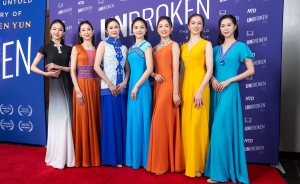
Shen Yun was started by Falun Gong practitioners. Recently, false allegations against Shen Yun have resurfaced this “cult” label. However, these allegations are made largely by people with undisclosed ties to the Chinese regime. Indeed, the presence of Shen Yun “cult” narratives online demonstrates the extent to which Beijing’s anti-Falun Gong propaganda has gained traction in the West.